Promotion within Levi’s Marketing Mix
Introduction
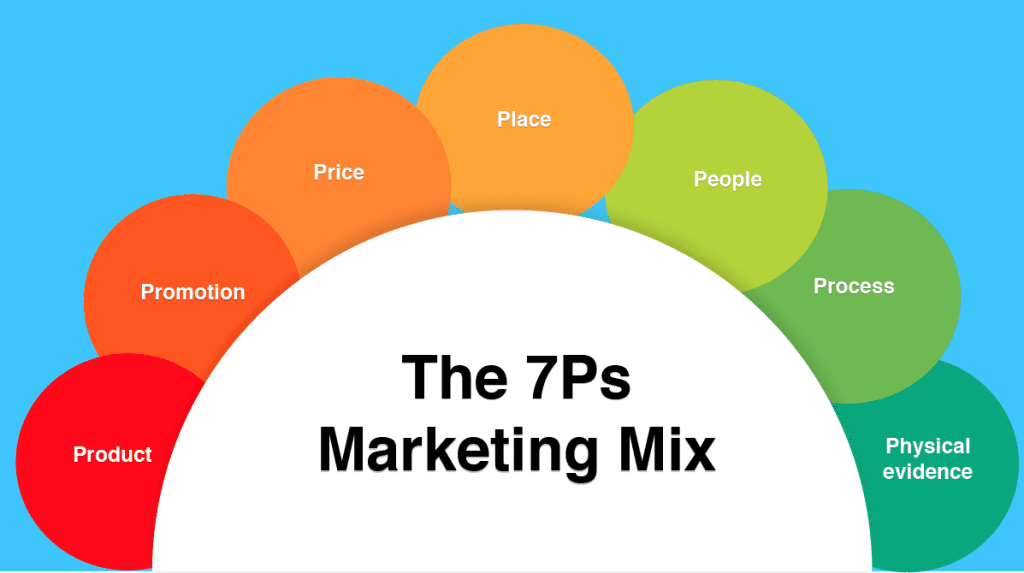
Philip Kotler defines Marketing as having two aims; attracting new customers and holding on to existing customers by keeping them happy and meeting their needs (Kotler, 2017). Promotion, forms an integral part of the Marketing mix and includes activities such as; multi-media advertising, PR, personal selling, direct marketing, digital marketing, email communication and sales promotion. Here, I will analyse Levi Strauss and Co’s ’Levi’s’ promotional campaigns and how they have been successful.
An overview of Levi’s Promotional campaigns
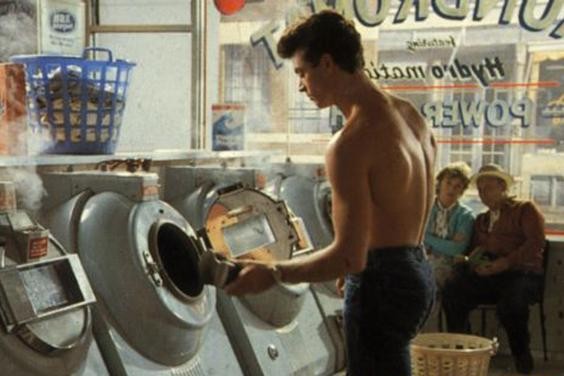
Levi’s has been responsible for many notable and memorable campaigns during it’s 147 years of making jeans. From their simple ‘They all wear Levi’s’ posters in the mid 20th Century, iconic TV advertisements during the 80’s and 90’s, to their high-profile collaborations with brands and celebrities. Levi’s isn’t short of creativity.

In a consumer World where brand loyalty is low and choice is high, companies are having to find new, inventive ways to build trusting and authentic relationships with consumers (Llopis, 2014). To survive, brands must approach their marketing in a fluid way, constantly evolving and keeping up with the fast-paced digital age. With that in mind, much of Levi’s promotional focus today is on social media, PR activities (including activism), product placement and collaborations (Bergh, 2019).
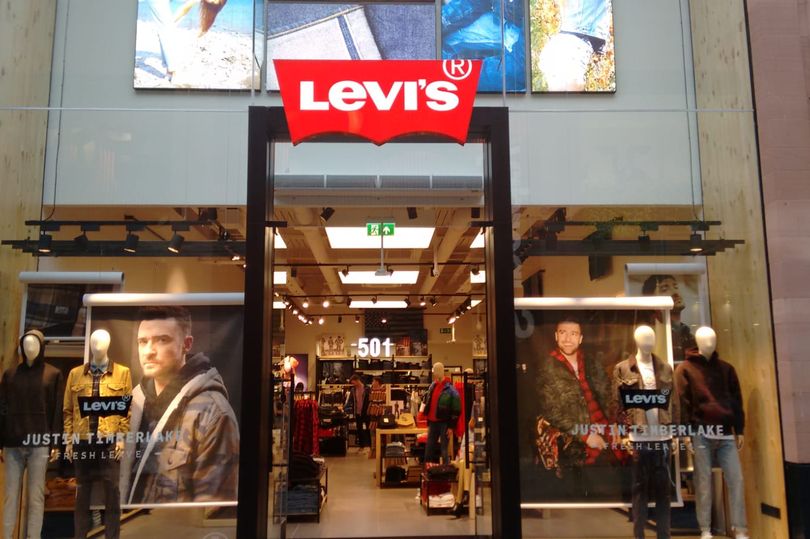
Levi’s current, long running campaign is named ‘Live in Levi’s’. Created by CMO Jen Sey, the company encourages customers to share their ‘Levi’s’ stories. Within stores, customers jeans are displayed on the wall and form an engaging, inclusive display (Gamez, n.d). In Phillip Kotler’s ‘Future of Marketing’ (Kotler, 2019) he impresses on the importance of creating narratives and customer centric marketing, whereby the customer becomes an advocate. This campaign utilises exactly that.
Strategies for 2020
The bulk of Levi’s online promotional campaigns are aimed at the Gen Z and Millennials segment. The company has built on a strong history of outfitting subcultures (Klepacz, 2018) however, Levi’s cannot rest on it laurels in this digital age. Consumers dictate market trends and expect more than just a nice piece of cool clothing. Nine out of ten Gen Z consumers expect companies to address environmental and societal issues (Amed, 2019).
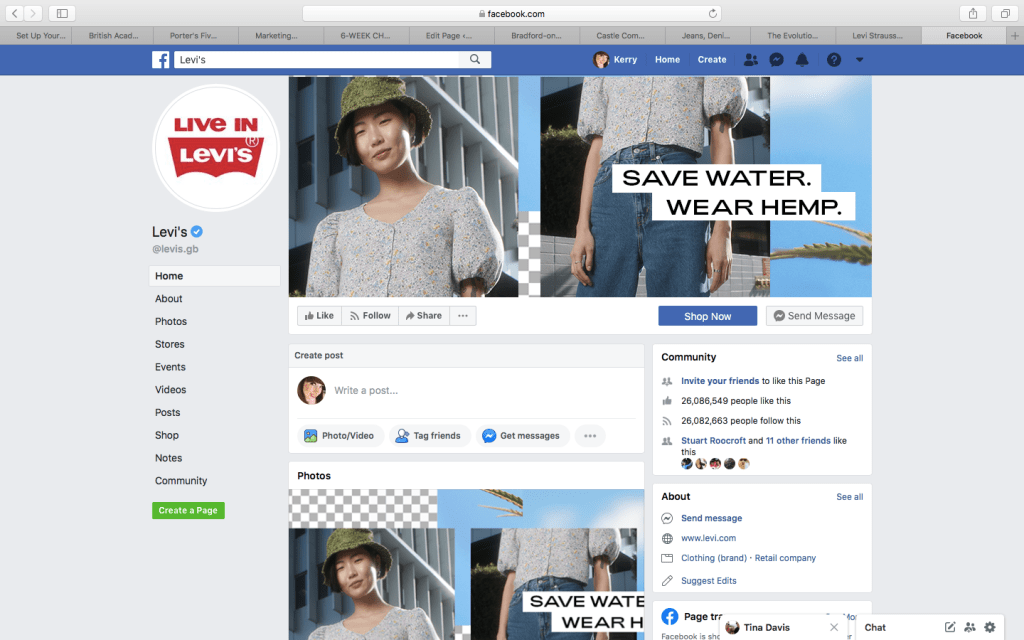
In Kotler’s Marketing 3.0 (Kotler, 2014), he states that companies must care about the bigger picture and build a love affair with their customers to achieve their full potential. In answer to this Levi’s has changed much of their manufacturing processes and has launched campaigns to promote this. The most recent campaigns on Facebook are; ’Save Water, wear hemp’ and ‘Well thread, our most sustainable jeans ever’ (Facebook, 2020). There are also a number ofcampaigns aimed at societal issues; ‘Use your vote’, ‘Use your voice’ and ‘Pride 2020’. However, it’s not all positive, there has been an ongoing campaign to change the way Levi’s makes the leather ‘Two horses’ patch at the back of their jeans (Chua, 2019). PETA animal rights group have been attempting to appeal to Levi’s core value of empathy by asking them to make the patch from vegan leather (Chua, 2019). During my research, I have seen negative comments on every post Levi’s has published regarding this matter and, also for fair pay in Bangladesh (Facebook, Instagram, 2020). Ignoring these issues could have an impact on their overall message of being a sustainable and compassionate industry leader. In turn this could affect consumer perception of the brand’s authenticity and turn them off.

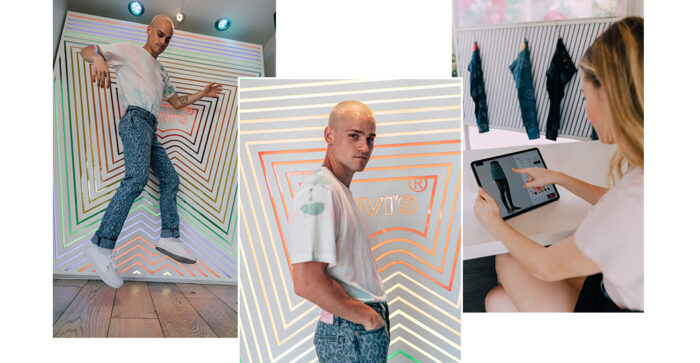
With the current Covid Worldwide pandemic it’s important to touch on Levi’s latest promotional campaigns and how they have tapped into social channels. TikTok has become a go-to for young people during the time of lockdown. Levi’s partnered up with four influencers with huge followings, as a result they doubled their product views (Lai,2020). On Instagram they launched the ‘501 day’ with performances from influencers and celebrities. The company also uses content creation in the form of blogs on their website and videos on their YouTube channel to further promote Levi’s ‘community’ and tap into customer wants and needs. Their digital business has doubled in the last 3 years and accounts for 15% of their revenue and this is largely due to an increase in social media visibility (Lau, 2020).
Conclusion
To conclude, Levi’s successfully uses the full range of modern marketing techniques to create promotional campaigns that are relevant to their target market.
The company has shown signs of growth and this is in part due to clever use of social media, tapping into societal concerns and campaigns that use customers as advocates.
Kerry Mclaughlin, 18th August 2020.
REFERENCE LIST
Fig 1. Perez, S. (2020) ‘Levi’s partnered with TikTok on social commerce and doubled it’s product views’ in Tech Crunch (online) Available at http://www.techcrunch.com
Fig 2. Hanlon, A. (2019) Marketing Mix ‘How to use the 7 P’s’ in Smart Insights (online) Available at: http://www.smartinsights.com
Fig 3. Stone, J. (2013) ‘The riveting story of John Hegarty and Nigel Bogle on their favourite Levi’s ads’ in The Drum (online) Available at: http://www.thedrum.com
Fig 4. Levi’s online (2020) ‘Levi’s x Peanuts screenshot’ in Levi (online) Available at: http://www.levi.com
Fig. 5 Bray, A. (2018) ‘Levi’s store finally opened’ in Devon Live (online) Available at: http://www.devonlive.com
Fig. 6 Levi’s screenshot (2020) ‘Levi’s Facebook page: Save water, wear hemp’ in Facebook (online) Available at: http://www.facebook.com
Fig. 7 Unzipped staff (2016) ‘Levi Strauss recognised for supply chain transparency’ in Levi Strauss (online) Available at: http://www.levistrauss.com
 Curiously Suffolk